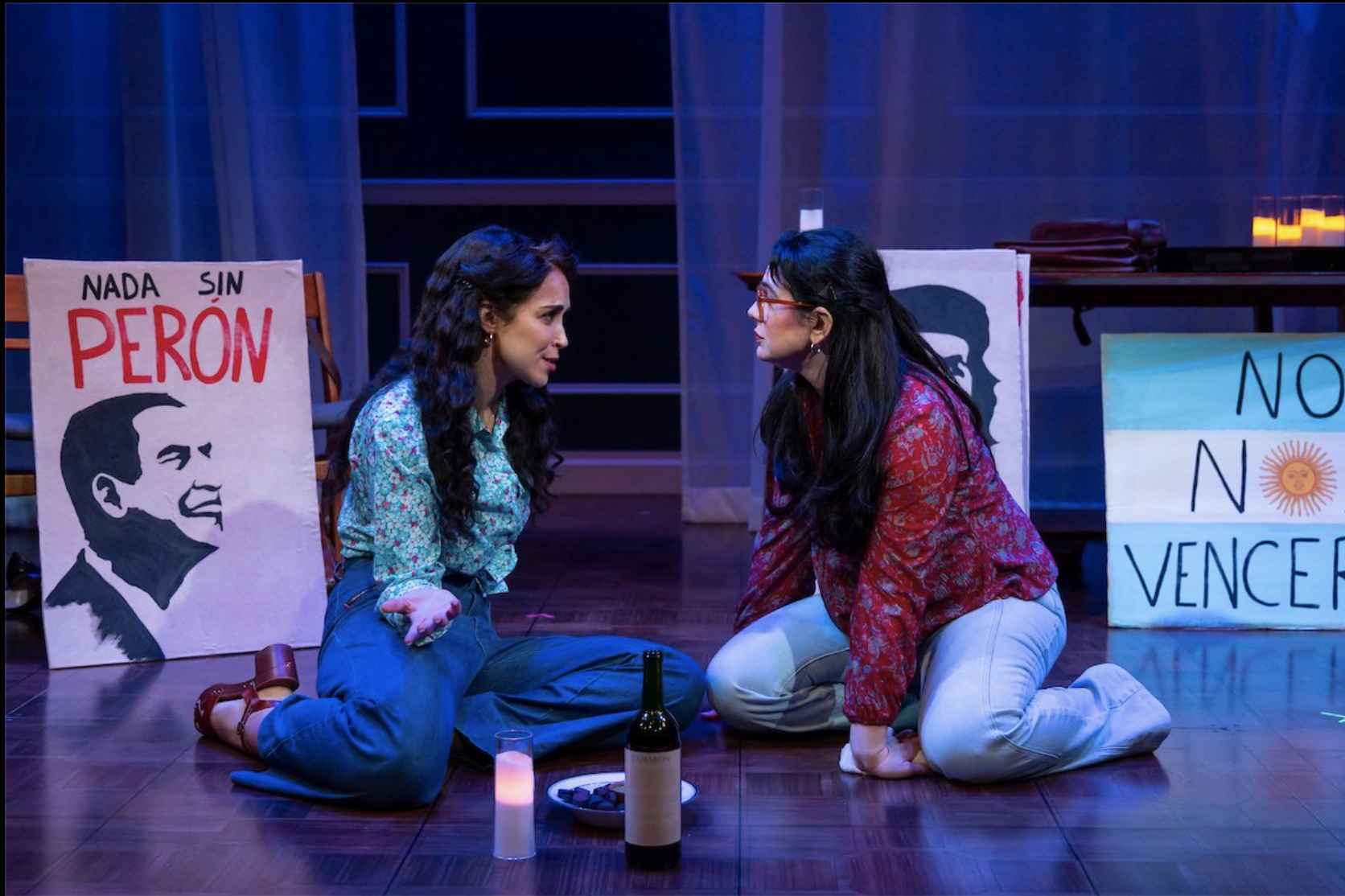
After the show finished in the evenings I would walk over from the theatre, snuggle up with Tati and watch true crime shows—heists, mostly. It felt as though I was achieving something: I was solving crimes. Good job, me.
14 May, 2025
Where the Rivers Meet
07 May, 2025
Writing Tips, Part 2: Finding Material to Work With
Look around you. Behold both the natural and man-made world. Observe how people dress, move and behave. Listen to conversations and note people's vocabulary, phrasing, accents and subject matter. Consider their motivations, hopes and fears. Observe colors, feel textures, be aware of smells and sounds. Create images to capture and convey these details to others.
Regard these things like a philosopher.
An actor.
A monk.
A teacher.
An animal.
A child.
Inspiration rarely arrives with fanfare. Sometimes it’s in a half-heard conversation, a peculiar dream, a word you’ve never heard before, a new story that sends you down a research rabbit hole. Nothing is ever too trivial or unimportant to observe and build upon in your writing.
Read widely and with curiosity. Reread passages you love and ask why they work. What’s the rhythm? The word choice? Use of metaphor? The structure? The linguistic play? Let great writing thrill and please and teach you.
Becoming a good writer is impossible without reading, re-reading and thinking about what you read. Don't be afraid to be influenced by really good writers; they will have done the same. Read widely, in all genres. When something moves you, stop and ask why.
Carry a book with you wherever you go. Actually read the poems on the subways. Read in libraries and bookshops, on the bus, in bed and in the bath. Just read!
Don't be afraid to experiment in your reading. Go to a bookshop and ignore the piles of three-for-two offers and titles that you've already heard of. Read the blurbs on the back of books and consider which ones appeal to you and why. Browse the shelves and pick something obscure that for some reason appeals to you.
You don’t need to reinvent storytelling. Read stuff. Good stuff, weird stuff, stuff you hate.
Here are a few of my favorites:
- Toni Morrison – The Art of Fiction No. 134 (The Paris Review)
- Jhumpa Lahiri – At Work
- Stephen King – The Art of Fiction No. 189 (The Paris Review)
- Margaret Atwood – A Living Legend on Creative Process Zadie Smith – In Conversation with Brick Literary Journal
- Sahlman Rushdie in Conversation with Charlie Rose
- Alan Moore – Philosophy on Writing
Writing is often solitary, but learning doesn’t have to be! Get some pals to come over and watch trashy TV and notice what keeps you all watching. Stalk your favorite writers and steal all their good habits (and only the legal ones). You can absolutely learn while also laughing at Real Housewives.
10. “Write what you CARE TO UNDERSTAND”
"Write what you know" has always struck me as the kind of advice that sounds wise until you actually try to follow it. Taken literally, it suggests that writers should only draw from personal experience, which can be both limiting and creatively stifling. While grounding your work in emotional truth or familiar settings can bring authenticity, the idea that writers MUST stay within the boundaries of their own lives discourages imaginative risk and experimentation—two things that are essential to great storytelling.
What if all you know is your grocery store job, your awkward adolescence, and the insides of your own head? That’s a narrow garden to plant stories in. And besides, isn’t part of the thrill of writing the chance to utilize the vast expanse of imaginative possibility? To step outside yourself, to sneak into other lives?
Powerful fiction comes from curiosity, empathy, and the ability to ask “What if?” Writing should be a process of discovery, not just reflection. It’s not about what you already know—it’s about what you’re hungry to understand and make meaning of. When we write beyond the boundaries of our own experience with curiosity and care (this includes utmost respect for people, cultures, realities and existences far beyond our own), we don’t just create richer stories; we also expand our own worldview. Isn’t that what the best writing does—change both the writer and the reader?
If writers only stuck to what they literally knew firsthand, we wouldn’t have Beloved (Toni Morrison was never an enslaved woman), or Life of Pi (Yann Martel did not, to anyone’s knowledge, survive a shipwreck with a Bengal tiger). Mary Shelley was 18 when she dreamed up Frankenstein, and she wasn’t exactly surrounded by galvanic experiments—she was surrounded by poets and stormy weather and big questions about science and ethics. That was more enough.
Here’s the thing: writing isn’t a diary entry. It’s an act of empathy and imagination. You don’t need to have been a surgeon or a spy to write about one, but you do need to be curious and thorough. You need to ask good questions and care about research so you get the answers right. That might mean reading memoirs, interviewing people, going down research rabbit holes, or just sitting very quietly and asking yourself what it might feel like to live inside someone else’s skin. If you can do that—if you can make another person’s experience feel vivid, true, and specific—you’re doing something much richer than “writing what you know.” You’re writing what you care to understand.
So if you want to break out of your own story, start small. Give a character a job you’ve never had. Set a scene in a place you’ve never been. Let someone make a choice you never would. Follow your questions instead of your memories. Writing adventurously doesn’t mean accuracy over imagination; it means combining the two. It means being courageous enough to leave the trodden paths of what’s familiar, and trusting that your curiosity will steer you somewhere fascinating… somewhere you might never have believed… and the world has never conceived of before.
02 May, 2025
Books-by-the-Month: May
I like to turn to books that speak — in their vastly different languages—to the alchemy of spring.
Because though full of warming days and the promise of jacket-free softly lit days, May is delightfully deceptive. On the surface: sunny, sprouting, slightly unhinged from the pollen. Underneath: existential dread with a side of compost.
So here is a varied collection that hums with May’s energies: growth, mystery, intellectual fertility, and the shivering joy of the irrational.
And what more can we ask of Peak Spring than that it remind us, gloriously, that we have not yet read ourselves to the end?
1. The Wild Iris by Louise Glück
A poetry collection for when the world is turning green again. Glück’s poems are spare, clear, and full of the voice of flowers—serious and quiet and somehow thrilling. Reading Glück’s The Wild Iris in May is like walking barefoot through cold dew: it arrests, it cleanses
The poems, spoken in turns by gardener, flower, and G-d (Herself!) create a polyphony in which voice and silence, blooming and burial, despair and redemption, are not opposites but connected, natural realities. Glück’s garden is a battleground of consciousness, where the soul grapples with its mortality and the silence of the divine. And yet, the book shimmers with hope.
The iris, that May bloom with its blade-like leaves and solemn faces, becomes a totem of persistence.
“It is terrible to survive / as consciousness / buried in the dark earth,”
Why: May can feel mischievous — a perfect time for this surreal, hilarious story about a 92-year-old woman uncovering a mystical conspiracy at her retirement home.
And that? Is all I shall say lest I spoil the mischief.
A play about gardens, chaos theory, and the collision of past and present? Sounds like May to me!
As Guenevere famously touts in Lerner and Loewe’s Camelot— the “lusty month of May” is “that darling month where everyone goes wistfully astray.” The month of May is a kind of c h a o s.
Tom Stoppard’s Arcadia takes place in an English country house where past and present slide over each other like water over glass. The play toggles between 1809 and the 1990s, between a 13-year-old genius named Thomasina and a cadre of modern academics trying (and failing) to make sense of her brilliance.
The brilliance of Arcadia lies in its marriage of head and heart. It makes fractals romantic and carnal love scientific. It is the ideal spring read because it is both fecund and formal—its dialogue clipped and exquisite, yet drenched with emotional urgency. Like May, it is a hinge: a time when intellect and instinct flirt outrageously, each stealing the other’s lines.
Read Arcadia aloud I say! Do all the voices! Don’t skip the stage directions! Revel fully in Stoppard’s wit, or better yet, see it performed live.
4. Weather by Jenny Offill
Early summer often brings a hum of low-key anxiety about the future (think graduation, life changes,
existential dread). This fragmented, witty novel captures May’s atmosphere beautifully—the month when the world is either blooming, buzzing, or quietly breaking into a sweat.
Reading Weather in May is like sipping lemonade while doomscrolling—it hits both your sweet spot and your spleen. Offill’s prose, famously fragmentary, lands like poetic pollen: light, airborne, and likely to spark a reaction. It mirrors the May mood—attention fractured by birdsong, barbecues, and the gnawing sense that climate change might just cancel June.
Weather is the literary version of overhearing a whip-smart stranger muttering to herself in a community garden. It’s a domestic novel, sure, but with apocalyptic garnish. Our narrator, Lizzie, is a librarian who collects anxious questions like others collect wine:
May is also the month when we remember we’re animals—squinting at the sun, dreaming of reinvention. Offill gets this. Her characters are always evolving, molting old selves. Weather doesn't hand you answers; it hands you a dandelion puff of paradox and invites you to blow.
Liu Cixin’s The Three-Body Problem is a groundbreaking science fiction novel that blends Chinese history, political intrigue, and astrophysics in an utterly unique way. Set against the backdrop of China’s Cultural Revolution, the novel explores the consequences of first contact with an alien civilization.
The story revolves around a physicist named Ye Wenjie, who, after a series of traumatic events, sends a signal to the stars—a signal that is eventually answered by an alien race on the brink of extinction.
Liu’s writing is at once intellectually stimulating and emotionally compelling, exploring themes of scientific progress, humanity’s place in the universe, and the unanticipated consequences of our actions.
This first book in the Remembrance of Earth’s Past trilogy will take you on a mind-bending journey through space and time.
27 April, 2025
Adios, ¡VOS!
| the one & only ©Michael Kushner |
Gracias, VOS. And adiós por ahora.
This experience has meant so much to me.
It has been a chance to portray two glorious, full-bodied, mature, brilliant Latin women.
It has been to create these characters in its world premiere.
It has been an honor participating in Christina’s debut as a playwright.
But it has been an antidote to a rewarding tough few years in the American theatre. Thanks to Nicole A Watson and Christina Pumariega — not only was my whole self welcome, it was celebrated. And that’s a gift indeed.
In truth, it has been years. Years since the fire has dimmed to embers.
Then came this strange, quiet miracle: Nicole's room. A space built from listening. A director who saw past the residue of my disillusionment and asked nothing more than presence, than truth. And Christina—with her words like spiritual scaffolding. Her script didn’t demand performance; it extended a hand and whispered, "you're home."
And then there was the theatre itself—Two River. A sanctuary in red brick and soft light, where ghosts and futures meet. It held us gently. No, reverently. I found myself walking into the building and exhaling without realizing I’d been holding my breath for years. In that rehearsal room, beneath the soft hum of collaboration and care, I remembered. Not just how to act. But why. I found myself again in the silence between cues, in the sparkling mischief in the eyes of a scene partner, in the courage to stand still and let something real arrive.
After all the disillusionment, the heartbreak, the long winter of burnout, this was spring. And its name was VOS.
24 April, 2025
The Dressing Room Project: ¡VOS!
The Dressing Room Project is the brain child of Michael Kushner (my friend and fave photographer of my face), where he takes his camera, his discerning eye, his incredible person-ability to bring the best out of actors preparing to go onstage, all married with his unparalleled taste to bring you images unlike any other. Actors preparing. Actors before the world sees them. Intimate, Engaging.
Michael was generous enough to come out to Two River Theater to photograph Christina and I before VOS, and how lucky we were and are. Enjoy.
| ©Michael Kushner |
| ©Michael Kushner |
| ©Michael Kushner |
| ©Michael Kushner |
| ©Michael Kushner |
| ©Michael Kushner |
| ©Michael Kushner |
| ©Michael Kushner |
| ©Michael Kushner |
| ©Michael Kushner |
| ©Michael Kushner |
11 April, 2025
¡VOS! – a world premiere
![]() |

photo by @motendesigns (also our phenomenal scenic designer)
A play is nothing without the team that makes it. It takes a village.
photo by @motendesigns (also our phenomenal scenic designer)
That village is:
Designer: Raquel Barreto
Lighting Designer: Carolina Ortiz Herrera Sound
Designer: Sinan Refik Zafar
Projection Designer: Kelly Colburn
Dramaturg: Sarah Rose Leonard
Dialects: Rosie Berrido
Intimacy Coordinator: Alex Might
Production Stage Manager: Jynelly Rosario
Rehearsal Assistant Stage Manager: Gracie
Carleton
Assistant Stage Manager: Abigail Medrano
Casting: Caparelliotis Casting and Joseph Gery
Assistant Director: Jessi Stier
Associate Scenic Designer: Danielle Delafuente
Assistant Lighting Designer: Hayley Garcia Parnell
Hair and Makeup Consultant: Carissa Thorlakson
Projections Consultant: Dylan Uremovich
![]() |
![]() |
![]() |
![]() |
08 April, 2025
Alternative Email Sign-Offs for an Unhinged Era: A List
03 April, 2025
Books-by-the-Month: April
April books: the books you read with a window cracked open, letting in the smell of new grass. The kind you flip through lazily on a park bench, feeling virtuous for finally sitting outside. In April the days stretch, juuuust a little longer, and the first true rains of the season drum against the windows—not the relentless, chaotic, personality-disordered downpours of March, but the gentler, softer showers that turn the world green overnight.There’s something about this month—half spring, half something else—that calls for stories with a little moodiness.
- A big ol’ novel that shifts between sunlight and shadow.
- A collection of poems that brims with the promise of newness; read in snippets, between peeks at the tulips.
- A story that is best read with the window cracked open, so the smell of rain and freshly turned soil can mingle with the scent of well-worn pages.
- A classic you’ve been meaning to get to, because April always feels like a fresh start (until you realize it’s just March with better PR).
And thus, it deserves books we reach for when the sky darkens at two in the afternoon, and you think, Well, if April is going to be like this, I might as well… READ.
So, in honor of the month of new beginnings, sudden downpours, and the eternal debate of jacket vs. no jacket, here are the best books to read in April—stories that bloom, that rain, that whisper of change.
*
Smith’s novel is like April itself—unexpected, shifting, unruly, full of thaw and tension. A meditation on art, politics, and the changing seasons, it’s part of her Seasonal Quartet but stands beautifully on its own. Ali Smith’s novel is both fiercely political and deeply lyrical, weaving together fractured narratives of disconnection and rebirth. Like the month of April itself, Spring resists simplicity. It is not just a celebration of renewal; it is an interrogation of it.
Smith’s writing pulses with the restless energy of the season. She juxtaposes stark realities—immigration detention centers, Brexit-era disillusionment—with moments of sudden, almost mythic beauty. A lost filmmaker, a cynical older man, and a mysterious girl moving through the world like a force of nature—all collide in a story that feels as unpredictable as April’s shifting weather. Smith writes in a way that mimics spring’s own rhythms: fragmented yet whole, sharp yet tender, unafraid of moments of stillness before sudden, torrential movement. To read Spring in April is to be reminded that the season’s promise is not gentle; it is urgent.
But what makes Spring the perfect April novel is its insistence on possibility. Smith, like the season itself, is relentless in her belief that change is coming—even if it arrives in fits and starts, even if it is difficult, even if it asks us to reckon with the past before moving forward. April is a threshold, a moment when we must decide whether to step through or turn back. Spring is a book that urges us to step through. It does not offer easy answers, but it offers something better: the certainty that something new is always just about to begin.
3. "As One Listens to Rain by Octavio Paz
A single, stunning poem that captures the feeling of April rain—not just falling, but soaking into memory and thought. A reminder that poetry belongs to spring as much as birdsong does.
Spring has always been the season of poets—and Octavio Paz, with his relentless curiosity and lyric precision, is a perfect guide for this awakening. "As One Listens to Rain" one of his lesser-known but deeply evocative works, reads like a meditation on transience, a book where each page shimmers with April’s dual nature: beauty and uncertainty, light and shadow. The title alone suggests something more than mere precipitation—it suggests an atmosphere, a presence, a self dissolving and reforming in the rain. His language does not settle; it moves, like water, through history, myth, and personal reflection.
4. A Little Life by Hanya Yanagihara
This one is a heavy hitter—if you’re looking for an emotionally intense reading experience, A Little Life is a stunning and, at times, painful masterpiece. Following four college friends as they navigate their adult lives in New York City, the story zeroes in on Jude, whose traumatic past emerges slowly, layer by devastating layer.
Yanagihara’s writing is visceral, unflinching in its depiction of suffering and survival, and yet there’s a strange beauty in her exploration of friendship, loyalty, and the human need for connection. It’s a novel that stays with you long after you've finished it, one that might make you rethink what love and friendship mean. Perfect for a long, reflective read.
5. Pilgrim at Tinker Creek by Annie Dillard
No one Pays Attention like Annie Dillard. April is a month of noticing, and no book teaches the art of attention better than Pilgrim at Tinker Creek. Annie Dillard’s Pulitzer Prize-winning meditation on nature is, at its heart, a book about seeing—about standing still long enough for the world to reveal itself in all its teeming, chaotic, exquisite detail. And what is spring if not the perfect time to learn to see again?
Dillard’s writing crackles— she does not merely observe the natural world; she interrogates it, turns it over in her hands, studies it with the curiosity of a scientist and the wonder of a mystic. She watches frogs being swallowed alive by giant water bugs, muses on the violent abundance of a newly hatched praying mantis nest, and kneels in reverence before a floodplain crawling with new life. Her prose— almost incantatory—mirrors April itself, a season of bursting and breaking, of terrible beauty and raw becoming. Pilgrim at Tinker Creek’s world is churning, restless, alive in ways both thrilling and unsettling.
But perhaps what makes this book most suited to this time of year is its deep, abiding sense of wonder. Dillard does not shy away from the brutal mechanics of nature, but she never loses her awe. She reminds us that the world is strange, that it is extravagant, that it is—despite all its cruelties—staggeringly beautiful.
26 March, 2025
Things I'd like to [learn how to] do: a List
![]() |
| © Emenem |
- speak:
italian, at all
spanish, fluently
- play an entire set of American Vaudeville and English Hall variety songs on the ukulele
- play the accordion, virtuosically
- witness birds migrating
- drive a race car
- make mosaic artworks (I’d especially like to beautify broken urban spaces like Emenem, It’s so inspiring to make the work a better and more beautiful place, one pothole at a time)
- spend an entire month in silence, in the literal or proverbial woods, living at the speed of a poet
- walk the Camino de Santiago in Spain
- getting very good at “doing nails”
- sky dive
- visit Antarctica
- wake up one day and just be "a morning person”
03 March, 2025
Books by-the-month: March
*
March Theme: Women’s History Month
Women are amazing. Good Gd how we hate them. Let's uplift them instead.
March Theme: St. Patrick’s Day
3. Angela’s Ashes by Frank McCourt
And yet, Ulysses is more than just an ode to Dublin—it is the very soul of Irish literary ambition; the book that shattered conventions and redefined what a novel could be. Joyce takes the English language, that instrument of colonial rule, and bends it to his will, infusing it with the rhythms of Irish speech, the poetry of everyday thought, the sheer audacity of a mind unchained. It is a book that demands everything from its reader, but in return, it gives back a universe— in which a single day can contain all of human existence.
With this addition, Julius Caesar rounds out the list perfectly, infusing the month of March with both the classic weight of Shakespearean tragedy and a timely nod to the historical moment that defines it.