Showing posts with label West End. Show all posts

19 March, 2020

"From the ashes we rise..."

    On March 13, 2020, during this very painful, confusing, and uncertain era of our human existence, Rebecca Taichman's original production of Paula Vogel's ''Indecent'' played its first of only two previews at the Menier Chocolate Factory in Southeast London.   


    For those of you who may not know, the Menier Chocolate Factory has become a beacon of theatre around the English-speaking world, championing new works, while producing and very often transferring their production to the West End, Broadway and beyond.

    Previews came after a period of extensive, detailed, emotional, and spiritually grueling work on the part of our extraordinary company and creative team (particular shout out to the associates who taught us everything, Ashely Monroe and Sara Gibbons). It also came 30 minutes after the news of the monthlong closing of the Broadway theater community.   

    Within moments, so many of my New York colleagues were out of a job. For quite a while. In London, we knew it was only a matter of hours before the lockdown came for us too. That night my heart surged with ache for our ravaged community that's very existence relies upon its live-ness.  

*

   
One of the great joys of Taichman's production is the half-hour pre-show where the entire company sits in stillness and watches the audience enter the space. 

We watched and bore witness, with tears in our eyes that we could not wipe, as the audience of 175 people slowly filled the seats in an act of wartime solidarity and need.   

The people with us on those two nights fought to be there, wore masks, sprayed down their seats.    

They needed it.   

Escape. 

Storytelling.   

The healing power of theatrical communion that, from the very beginning of its Greek origins was designed for shared catharsis, rivaled only perhaps by formal spirituality found in churches.   
For many, the theater is that very place of worship.  

It certainly was those two precious nights.   

And just like the players in the attic of ''Indecent'', with no clear idea what tomorrow may bring, we all decided to do a little play. For the "few souls" who braved coming. And it was glorious. 


*


At the end of ''Indecent'', there is a scene where two lovers, Rifkele (Molly Osborne) and Manke (me) dance passionately in the rain. It is a scene taken from Sholem Ash's ''God of Vengeance'', the play on which ''Indecent'' is inspired. 

As the sensation of the freeing-cold rain washed over us, I felt a rush of gratitude and joy. We were surrounded by waves of love, support and joy from our friends and colleagues. Moments this sacred are rare in the theater, and it was my honor to serve.  

On a personal level, only 11 weeks ago I had an adult Bat Mitzvah, and emerged in the ritual mikveh. This "rain water" felt as spiritual, as holy, and as cleansing. I felt certain I was the most fortunate woman on earth to tell this story — particular beside the dream that is Molly Osborne.  

Molly and I wept. We honored all of our actor predecessors (many of whom are good friends), and above all, the real-life people we represent that can no longer speak for themselves.  

The Rain Scene: Before...and After


*

    An hour or so after the preview performance came down, a longtime student, protege and now friend of mine, Allison, wrote to me and asked how it had gone. Allison Beauregard is a beautiful young artist: powerful, deep, intelligent, fiercely brave and, incidentally, a Queer woman. Indecent means everything to her, and I was stepping into what is a dream role and experience, and sharing the experience with her has been profound for both of us.

With her permission, I share our exchange:

Allison:
    What was it LIKE?
Alexandra:When you are a very young person
Who dreams of what being in the theatre could possibly feel like
And you dream and hope?
……..It felt like that.

36 hours later? She sent this:


Allison: I’m SO sorry to see your show’s postponement notice, Al.

Alexandra: For a moment — I got it. I had it.

*

    I have always felt as though our theatrical creations do, truly, live. Somewhere. We take a knife to the folds of the Universe and discover that Ophelia lives in this fold, Nora in another. Willy Loman, Iago, Mrs. Lovett, Electra, Julie Jordan, Anna, and the King? They take off from their creators, and go forth, belonging ever-more to the Universe at large.

     And by that logic, so too do Rifkele and Manke. Somewhere in some universe, they are always dancing together, falling in love, in the rain. Forever. 

*

I know so many of us are terrified.

But what I learned from sharing our story that first preview? The theatre and the human spirit are both inextricably linked and inextinguishable— and, to quote Paula Vogel from her very own Indecent:

    “The play belongs to the people who labor in it, and the people who set aside time to be there in person.”


Please dear theatre-makers and lovers—take heart.
From the ashes, we WILL, all, rise.


18 January, 2020

In dialogue with "Hey, Alma" regarding my Bat Mitzvah!

Hello, darling blog readers!  Below is an interview I did with Emily Burack for the glorious Jewish website Hey Alma.

Enjoy a little peek inside my journey to becoming a Bat Mitzvah at 36, and all the illuminating points along the way.

The article below was published on Hey Alma, January 17, 2020.

*

Alexandra Silber is a Broadway star, writer, Jewish educator — and now a newly bat mitzvah’ed woman.

Let’s back up a second. Silber is Jewish; she was raised outside Detroit, Michigan, the daughter of a Jewish dad and a Catholic mom. Her dad passed away when she was 18 years old.

Silber has a long history with Fiddler on the Roof. In 2007 and 2008, she portrayed Hodel (the middle daughter) on London’s West End, and in 2015 and 2016, she was part of the Broadway revival of Fiddler as Tzeitel, the eldest sister. After the Broadway run of Fiddler ended, she went on to write After Anatevka, a novel that imagines what happened to Hodel after the story of Fiddler ends, and White Hot Grief Parade, a memoir about what happened when her father died of cancer.

“After two huge productions of Fiddler and the publication and book tours around each of my books, I met so many people in Jewish communities that sparked, fed, and fueled my interest in knowing more, and finding a peaceful, curious, voracious, and joyful certainty of God,” Silber explained over e-mail to Alma. Becoming a bat mitzvah “was the best decision I’ve made in my adult life.”


We talked with Silber about her bat mitzvah, why she wore her mom’s wedding dress and her deep relationship with Fiddler on the Roof.

Mazel tov on your bat mitzvah! What made you decide to become a bat mitzvah?
I come from a mixed family — my father’s family being Jewish and both sides of my mother’s family, Catholic. Life in my home was deeply spiritual, religiously informed, but entirely secular. I would say I am definitely a product of a few generations of highly motivated American assimilation — my mother’s cultural background is Irish and Latinx, and her maiden name is Noriega. When and where she grew up in California in the 1950s and ’60s, there was cultural incentives for assimilation that her parents and grandparents gave their lives for.


The same was true for the Silber family. My grandparents came into the prime of their adulthoods during the Holocaust, and though they were far from the European atrocities, their families and friends were not unaffected by the horrors. I will never fully understand their experience, but I can wrap my mind around the cultural pressures to assimilate.

I lost my father to cancer when I was just 18, and the experience charged me with many spiritual life-and-death questions at that tender age. As I’ve grown, those thoughts and concepts have swirled around me, informing so much of my life and work. And of course, professionally, Judaism has been a huge part of my life and immersing in the culture via the theatre (and subsequently through my books) has been a game-changer.

I saw on Instagram that you wore your mom’s wedding dress to your bat mitzvah — why did you decide to do this? What did it mean?
I’m so glad you asked this question. I wanted my mother to feel that she was literally embracing me, standing alongside me and offering a meaningful contribution to the ceremony that might otherwise feel slightly alienating to her culture and faith of origin. My mom Catherine could not be more supportive of all that I do, but I wanted her to feel significantly represented in the ceremony.
My parents were married in 1980 by a generous and beautifully spirited rabbi in Detroit, Rabbi Richard Hertz. The wedding photos of this outdoor Jewish ceremony are integral to my vision of my parents’ origins and peerless love story. It was a simple way for both of my parents to be “present” on the day, almost 40 years later.

What was the process like?
The month after the Broadway run of Fiddler on the Roof ended, Rabbi Larry Hoffman of Hebrew Union College invited me to teach at a retreat for his fourth year rabbinical and cantorial students. It was a three-day experience I will never forget. I used lessons commonly taught in theatrical environments and applied them to the scope of Judaism, and got some of the most memorable feedback and lessons were thrown back at me from the group of 16 or so students (that were largely my own age!).

A few students in particular really stood out to me as people I’d love to remain friends with — two being (now Rabbi) Samantha Frank and (soon to be Rabbi) Rena Singer. They had gone about starting what can only be described as a Reform, feminist, totally inclusive, profoundly informative, and an all-around glorious Instagram account called @modern_ritual. I devoured the content. I identified with it. And before long, I realized that if I was going to engage with this bat mitzvah experience, I wanted to do it with them — with peers I looked up to immensely leading me, in just the way I had led them just a few years earlier.

Rabbi Frank and I made an initial date to meet and discuss the details — my prior knowledge, my goals, and what I truly wanted from the experience, and together we crafted a plan that was personal to me, where I am in my life now as an adult woman. We met once a week (sometimes in person and sometimes over the internet), and not only learned Hebrew and trope (from scratch!) but we discussed all things spiritual, Israel, Torah, history, and culture.

What was the hardest part?
Aside from learning Hebrew (medium-hard — I’m quite adept at languages in general) and trope (almost unbearably hard as a musician and music-reader), the hardest part was the bittersweet moment of saying goodbye to Rabbi Frank after the process was over. She became the only person in my life (other than my partner and my mother) whom I spoke with every day. I miss her!

Totally on a different note from your bat mitzvah, why did you write After Anatevka?
I played Hodel in the ’07-’08 West End production at the Savoy Theatre. Hodel took on a deeper significance for me than any other character I’d ever portrayed, mostly because when I began rehearsing here in London I was coming to terms with the death of my father five years earlier at the age of 18. Hodel’s final scene is not only an assertion of her adult autonomy, but it’s her chance to say goodbye to her father, a chance I was personally lacking in my real life. When Hodel said, “Papa, God alone knows when we shall see each other again,” it was more than a piece of dialogue for me. It felt mythological, primal even.
after anatevka

I suppose I only now see the direct connection between the an 18-year-old girl who boards a train to Siberia, and an 18-year-old girl who boarded a plane to Scotland. By exploring and assuring Hodel’s future, and her capacity to endure, I was in some deeper way doing the same for myself.

Did playing Hodel in Fiddler impact your Jewish identity?
Of course. On several levels. The first being that I was playing Hodel in London and the UK has a much less prominent experience of Jewish culture woven into the mainstream than we do here in the US. That said, in a large cast of 30, I was only one of three (even remotely) Jewish actors, and throughout that experience I learned many things alongside the Judaism novices, as well as feeling charged to be the best ambassador of Jewish culture I could be. I did endless research not only to benefit myself but to be a more dependable guide for my castmates. That naturally trickled into my off-stage life.

Second, and perhaps deepening that experience, studying Jewish culture, history, and the faith itself gave me an aperture into my personal genetic legacy — a connection to my father, grandparents, and beyond — all of whom I could no longer connect with on earth in the present tense. It was a way for me to feel the ancient links that connected me straight back to Hodel herself. A way to feel close to my father.

fiddler al silber
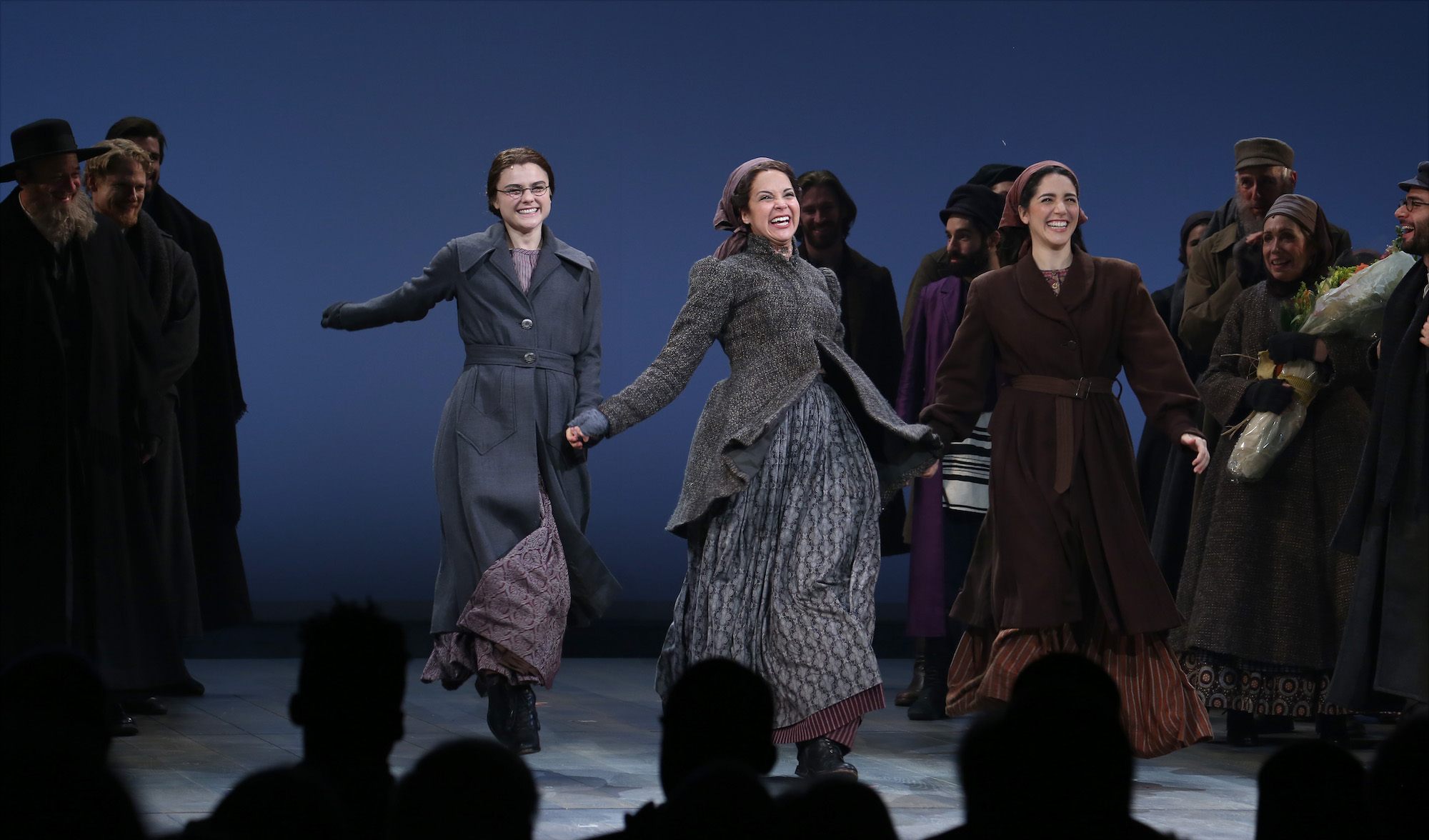
Melanie Moore, Alexandra Silber and Samantha Massell during the Broadway Opening Nigh,t Performance Curtain Call bows for ‘Fiddler On The Roof’ at the Broadway Theatre on December 20, 2015 in New York City.
By the time I arrived to live permanently in America in 2010, the process was well underway even if it wasn’t in the forefront of my consciousness. And by the time I was cast as Tzeitel in the 2016 Broadway revival, if the deal wasn’t sealed already, it was sealed doubly so by Rabbi Larry Hoffman of Hebrew Union College. He served as the Broadway production’s Jewish consultant, and we forged a very special connection that remains alive to this day.


What was the reaction like to your novel?
Largely positive. So many people shared my curiosity about what happens to this family! Of course, there will always be dissenters and people who wished I’d crafted the date of their beloved characters in a different way, but I had to remain true to history and to the woman I grew to know Hodel to become.

Jews have such a long history in the theater — why do you think that is?
All of the arts have powerful Jewish cultural parallels: ways of uniting a community, telling stories that make people think, feel, laugh, and change, and providing a way to bear the adversities of life.

What’s your favorite Jewish show?
Aside from Fiddler, I’m a huge fan of Paula Vogel’s gorgeous play Indecent — which chronicles the history of another pivotal Jewish/Yiddish play “The God of Vengeance” by Shalom Ashe.

15 February, 2018

Theater for the People - An Essay for The X Mag

The Power of Women Issue of The X Magazine by TodayTix 

When the storytelling goes bad in society, the result is decadence” — Aristotle

In olden days, as the song goes, theater was the art form of the people. There were no cost barriers keeping people from the theater. It was simply an expected, shared sociological experience.

Theater’s earliest origins extend back to Ancient Greece, where participation in the Festival of Dionysus, a multi-day cultural event, was a requirement of citizenship. Theater was not about celebrities or spectacle; it was about telling stories for the purpose of the public having a cathartic experience together. Aristotle defined it as “the purification of the spirit…by witnessing the playing out of such emotions or ideas on stage.” The result is positive change.

Flash forward several centuries to Renaissance England, where the works of Shakespeare and his contemporaries reigned supreme. While plays were commissioned by and performed at the pleasure of the royals, anyone could get a seat or standing room for a few pence and enjoy entertainment in the company of kings and queens. After all, the whole point of theater is to make it accessible to the wider public.

Cut-to 20th century Europe, where Bertold Brecht, the great German playwright and director, established the Berliner Ensemble and made theater accessible to and for the people as an essential tool for the recognition of social injustice, and  as a means of effecting social change.

Today, Broadway has become a purview of the elite, with premium ticket prices skyrocketing to more than $1000 to certain shows. Theater is, at its essence, a thoroughly social art form, therefore it cannot be experienced in solitude. If we can't get people into the theaters — whatever their socioeconomic reality might be — then we are not doing our jobs as theatremakers.

But TodayTix is helping change the perception of and access to theater, particularly through its rush and lottery tickets. While lotteries and rushes have existed for a while, not everyone has the flexibility to wait outside the box office in the morning or enter their name in a drawing at the theater. With the app, anyone can buy rush tickets or enter a lottery. You can even share your entry on Twitter and Facebook to up your chances of winning.  Theater is a social art form, and social media is making it even more accessible.

But more than ever, in fractious times like these when there is great fear and even greater uncertainty, theater can be a place of emotional and societal healing. The people need the theater, and it is more important than ever for every individual, regardless of circumstance, to bear witness. We need to know that we are not alone.

Photo by: Jenny Anderson (IG: @jennyandersonphoto/Twitter: @jennyanina)
 * * *
Link to online article 
For: The X Mag and TodayTix.com
Photo: Jenny Anderson
Styled: Jake Sokoloff in Karen Millen
Hair and Makeup: Austin Thornton

03 February, 2017

Ask Al: You Contain Multitudes

Dear Al,

Honestly, I am a little embarrassed to ask this question because I suspect you are asked it all the time, and possibly not with total seriousness. But I am actually asking in earnest: How do you get to Broadway?

I am a sophomore musical theatre student in a great American MT program and I’m a soprano just like you! It is my one and only dream to be a performer on Broadway someday, and I literally can’t see myself doing or loving anything else as much, but all I ever hear is how impossible it is to get “there,” how hard, how tough, how the odds are against us all. If that is true, then I don’t think I understand why training programs even exist for such an “impossible” profession! Because, well, you are “there.” You did “it.” You proved that this impossible thing, is not, in fact, utterly impossible. Somebody is doing it! So I figured I might as well ask what makes you tick, what motivates you, and how, if possible can others hope to be in a position like yours one day?

I know there is no real secret, I do. I know you have to work harder and be better than the rest. But what does that mean? What does that look and feel like?

You are such a big inspiration to me, and I just wanted to know if there were any thoughts on the topic you could share.

With gratitude,

Tara


 * * *

Dear dear Tara,


You’re not only a smart cookie, you are bold! This is a great question, and I sincerely thank you for asking this with such a genuine spirit. You are right, one does have to work harder and always strive to be the best they can possibly be in order to work at the top of any profession. But, assuming that that is obvious, let’s start by breaking up the mysteries of “making it” into a few points—all of which are not about specific “How To-s,” but about outlook.
 

1. No more “Never”
    Ah platitudes!  
    I love your logic because YES: Somebody is doing it. They have to cast someone, so “Why me?” Well, why not you? I like to think of Broadway as the “Special Forces” of the Theatre, and thus, by that logic, yes, it is an extremely rare, special, and thus, difficult achievement to make the cut. The reality is: you might not. Most people don’t. But? Some people do. And you could be among them. You have to be talented, bold, very resilient, and more than a little lucky.

    But you are correct: someone is out there doing it. People are also winning medals at the Olympics, going to outer space and this year the Chicago Cubs won the World Series. So take away those “Never” platitudes and replace them with language (and thus, thoughts/beliefs!) that stay open to possibility, even if the possibility is indeed slim.

Instead of
    “I’m never gonna make it,”
    “I’m never the lucky one,”
or
    “I’ll never sing like that”

Try phrases like
    “They have to choose someone!”
    “It might as well be me!”
Or,
    “Every day I am improving my skills and capacity!”


2. Athletes of the heart
    You are correct, “How do I get to Broadway” is a question I get asked all the time. It is matched in frequency to “How do I know when I’ve ‘made it.” And “What is ‘Success?’” Whoa Nellie. These questions all garner a similar response.

    'Broadway' is just like any other dreamy life goal. If I were an Olympian, people would assume that the view from the summit took years of early mornings, sacrifices, fierce commitment and bone crushing work, but somehow, society doesn’t always view artists in the same way. Believe me, the rigor required is identical, it just takes different forms. As Antonin Artaud said, artists are “athletes of the heart.” Artists of all kinds, but particularly interpretive artists have to do emotional gymnastics that turns their heart, minds and souls inside out to serve a story. But performing artists are also? Actual athletes. Just ask any performer doing 8 shows a week. Of anything.You ask what rigor "looks and feels like." That is, of course, different for every individual, but here are some ideas that I adhere to. These thoughts do not apply to and for everyone, but they are a guideline for me. (Also, if you are not an actor and you are reading this blog anyway, I welcome you to find the corresponding parallels in your own profession and life!)

    - Rigorous self-exploration (you are the only personal human experience you will ever have)
    - Incredible discipline (of diet, exercise, rest, study, class, physical therapy, skill improvement, health maintenance, vocal rest)
    - Empathy (you have to constantly expand your heart to be able to understand and portray without judgement, people very different from you)
    - Curiosity (about humanity, relationships, history, culture, and people who are different from you)
    - Voracious, rigorous study (read plays, books, see theatre, take classes)
    - Practice Practice Practice (you have to DO it actually warm up, sing, stretch yourself, sight-read, Read out loud, or freaking finger paint I don’t care— but you have to DO your art— every single day)
    - Exercise (your body is your instrument)
    - Feed yourself real food and actually sleep (depravity is overrated, and seriously uncool/not to be bragged about)
    - Constant skill improvement and expansion

Finally,


3. “Broadway” is special, but it also just geography
"Broadway" only made up of a few criteria:
    - The size of the house
    - The geography of the address.
     There are 41 qualifying Broadway theatres, all of which have to have over 500 seats, and located in the Theater District and Lincoln Center circling along the street “Broadway,” in Midtown Manhattan, New York City. It is also, not unlike church or marriage or the right to vote, much much more than just that the basic criteria, but in essence…that’s it...

     Yes, Broadway (along with London's West End) is widely considered to represent the highest level of commercial theatre in the English-speaking world. But, while that is amazing, and a wonderful goal to aspire to, there are many many places in America, and across the planet to create, perform, participate in, and enjoy, the theatre.

    Off Broadway services more New York city tourists in a calendar year than the Empire State Building, the Statue of Liberty and Ellis Island combined!

     And that is just New York! What of London’s West End, National and International Tours, summer stock, semi-professional theatres, and last but certainly not least, incredible, award-winning regional theatres across the country (like the Guthrie, McCarter, Goodman Theaters, the Mark Taper Forum, and of course, The Kennedy Center)? See where I am going with this? Essentially: There are lots of places to work that are not Broadway.

     These incredible venues are not only the birthplaces of many original works, and Broadway shows before they reach New York, but the majority of regional theatres like to revisit the past and cater to the audiences (just like you!) that love classic plays and musicals as much as they enjoy the new stuff, not to mention: they are the sites of many of my (and hundreds of thousands of other actors’) very favorite artistic experiences.

     In 2016 there were also over 500 amateur productions of Fiddler in America alone, along with 20 professional American productions, and countless international professional productions (did you know Fiddler has been professionally produced in Japan over 1300 times in the last 50 years?!)


Which brings me to the ultimate point:


4. Work is the Goal; and Work is Work
     I am no less playing Tzeitel than Haley Bond was at The Muny last summer, or Teagan Wouters continues to do in the Australian National Tour; or any number of Tzeitel’s across the country and world in regional, amateur and high school theatres. I get paid—and yes, a Broadway production usually gets recorded into an album, which is eligible for a Grammy; but the words themselves, the songs, and the life Tzeitel Kamzoil lives? Every actor with “Tzeitel” next to their name in the program says the same words—at varying levels of professionalism, artistic depth, exposure, technique, experience and capacity, yes—but we all still do it.

     And so can you, dearest Tara! If you possess talent and grit (and I’m just going to assume you do!) you can play Laurie and Carrie and Magnolia and Maria and allllll the yummy sopranos you want—they just might not be on Broadway. But honestly…who cares? You might thrill, entertain and move the good people of St. Louis or Sarasota or Minneapolis and that’s wonderful! Some of the greatest artistic experiences of my life have been in Edinburgh, Washington, DC, Sheffield, Manchester, Philadelphia, San Francisco and Los Angeles. These lovely roles are out there in the world to be played, and you might just play them. 

     For work is work. That is the nature of an functional actor’s life/a performing career. Working. Not working in a highly public, salary-and-fame-and-award driven way. Fame and fortune are hollow goals, and their pursuit (I promise, I've witnessed it) will make you miserable. Not every screen actor is a movie star, nor every musical theatre performer a Broadway legend. Some are both (ohai there Bette Midler, Bernadette Peters, Carol Burnette, and Mandy Patinkin)!
    But most of us actors are just going from job to job, and while often those jobs are quite rewarding, though sometimes they are not. That's okay. We go about this work regardless of the fancy address; we pay our bills, collect our insurance weeks, and when we are lucky, make new friends and fill our souls. But above all, working is truly about providing for ourselves as artists. That alone is a difficult goal to achieve (only 1% of all the actors in the Actors Equity Association, work) thus, being a working artist is truly the ultimate artistic dream. If notoriety and shiny awards come your way, how wonderful. If not? That’s okay too. Someone has to, nay, gets to play Hedda Gabler in Philadelphia; someone gets to play Valmont and Mama Rose and Coriolanus in Whereverville. Be honest: wouldn’t it be magical if that could be you?


5. “I contain multitudes”

    Walt Whitman said:
    “Do I contradict myself? Very well, then I contradict myself, I am large, I contain multitudes.”
    Whoa boy, Walt. Steady there. You nailed this on the head. Human beings are vast creatures, containing multitudinous textures, capacities, and qualities all of which make up who we are, and the stories of out lives.

     Broadway is a wonderful life goal, and I feel beyond honored to have “made it” to both the West end and Broadway myself—I count my blessings every single day.

    However, “Broadway” is, in actuality, just a goal like any other. It is like making partner, losing the weight, winning the medal, etc. There is no train station of “Success” one pulls into where when they depart, everything is perfect and grand. There is no magical wand that waves and voila you are all set. No no no. You achieve the goal, pop the champagne and celebrate! But then? Life proceeds.

    Ask any Olympian what life is like 3 weeks after they win a gold medal. I guarantee you they are watching movies and ordering takeout. My version of that is this: 40 minutes after my Carnegie Hall debut was I in a fancy champagne bar raising a glass of Veuve Cliquot in Manhattan? Nope. I was in Brooklyn Diner getting a strawberry milkshake with my mom, manager and two of my best friends. I was still in my ballgown. Then? I ran home, fell dead asleep, and woke up early to teach my 9am acting class for the next 6 hours the next day down at Pace. Why? Because I contain multitudes!  (Incidentally, not one of my students gave a damn that I’d made my Carnegie Hall debut the night before. They were too busy feeling their feelings and being chickens…). I reveled in the dichotomy of my activities—because life is ridiculous! And hilarious! And beautiful! All of the these activities heightened the celebration of the other, and of the richness of life itself.

    The point is: once you climb the mountain/achieve your dreamy amazing goals, yes, you absolutely get to enjoy the view from the summit! But then you have to realistically go about life with humility. That means maintaining and hopefully often expanding your standards; it means setting new goals, getting new dreams, falling on your face again and again (just in higher heels…) and on you go, living your life. You still have to vacuum, do the dishes, get sick, feel grumpy, bloat after eating salty stuff, get caught in the rain, and have bad hair days. #SorryNotSorry: big dreamers and high achievers are people too.

    Part of “making it” is not only accepting, but celebrating that your best life achievements and your greatest successes will come in may shapes and sizes. When I think of my Carnegie Hall debut, I do think of the orchestra, the gown, the sight of the hall, and that high C that soared over the crowd. But I also think of the strawberry milkshakes with my closest people, and the class I taught the next day at 9am. When I think of that achievement, it contains the multitudes of all of those details— not just the shiniest one. I was proud to be at school the next morning after the evening I’d experienced. I was proud to be celebrating the greatest artistic achievement of my life thus far with my dearest friends in a place that felt true to myself. Because I contain multitudes.

Work. Sing. Soar. Be yourself.
Whatever and wherever that lift-off point may be.
For you, too, contain multitudes.

28 January, 2016

Favo(u)rite Performances: A List

1. Charles Dance in Shadowlands 
I spent the first 8 years of my adulthood in the UK, first training in Glasgow at The Royal Conservatoire of Scotland, and then working in the West End in London— so many of my early, endemic theatre experiences are from those years. There were countless performances I’d describe as “wonderful,” but the one that sticks out as unspeakably thriling. That was Charles Dance as C.S. Lewis in Shadowlands at the Novello in 2008.

I was performing in Fiddler on the Roof (because, yes, it is the only show I do…) down the road at The Savoy so I took in a mid-week matinee and scarcely had any tears left for my own show that evening.

I was so overwhelmed by the entire production that I returned a second time (something I had, up until that point, never done before) and was, in fact, moved even more intensely upon re-viewing.

Incidentally [*crazy alert*] later that week, I happened to see Charles Dance purchasing (of all things) a meat pie in Covent Garden. I tried with all my might to muster up the courage/language/scrap of dignity to speak to him, thank him, be even remotely articulate. But alas, I hid behind a pillar starring at him like a stalker and just watched him buy and eat that pie… what a weirdo... Clearly, he truly left me speechless. 

It is/was my favorite performance I have/had ever seen in London.


2. American Idiot 
I can’t even talk/write about this one— woof (look: animal noises are a more apt description of my emotions than human language). It is so fascinating because AI isn’t really my “aesthetic” (I tend to enjoy classics more than contemporary things), nor is rock really my thing. But 9$84yo3h&l@ksjdnb*%clka¢sj¡, it didn’t just move me: IT TOTALLY DESTROYED ME.

How much you ask? It is the only time I have ever been obliterated so completely by a piece of theatre that the ushers came up to the puddle that was me after the theatre had cleared out and said “Um, miss? Uh, everything…okay? [*sobs more*] Okay well, um, we’re closing up…”

That music was the un-intentional soundtrack to my adolescence. And I know those people. They are my people.


3. The entire original cast of Ragtime 
There is no other piece of theatre that meant more to my family. The Original Cast recording pretty much orchestrated our lives in the late 90s, and no other piece of contemporary theatre has ever rocked me like it. I think you could say that long before I ever saw Ragtime live, it had already formed and shaped my personal connection to, my aesthetic, and my feelings for and about, the theatre. So when my father made it his mission to take our family to New York to see it, suffice it to say: WE MELTED. We cried a lake of tears and it not only met our expectations, it exceeded them.


4. Angela Lansbury in A Little Night Music. 
Anyone who even REMOTELY knows me personally, or follows me on social media, or happens to casually see my iPhone wallpaper knows that I have a mild (read: ridiculously-out-of-control) obsession with my only idol: Angela Lansbury. Can you believe it took me 26 years to see her live on stage?

Having admired her on television, in films and on every cast recording she EVERMADEINTHEHISTORYOFEVER, the very first time I saw her live on stage was as Madame Arcadi in the 2009 revival of A Little Night Music and… I died a little.

Could I meet her afterward at stage door? Nope. I’m actually quite shy, and I also would never have known what to say… it was pretty magical to be 25 feet away from your only idol for the first time, and also? She was marvelous and classy and beyond beautiful in the role.


5. The Seagull at Lake Lucille 
 This cannot even be called a production, but is more accurately to be titled an “event” of epic proportions. I am a major fan of both Chekhov and “marathon theatre,” but this took both to the utter extreme. Founded by Melissa Kievman and Brian Mertes in 2003 the Lake Lucille project re-framed their Rockland County home as a performance venue. Basically? You drive out to Lake Lucille. You park near their house. And you (and maybe 90 other people) witness an all-encompassing, site-specific, marathon theatre event where 4 acts of The Seagull takes the entire day to witness.

In between Acts 2 and 3, you eat a gigantic potluck meal in a field. Actors enter from across the lake, they swim when they exit. Live music accompanies a parade that walks the crowd to the following scene. Mind. Blown.

It didn’t hurt that my treasured pal Gabriel Ebert played Konstantin with such depth and vigor, who is absolutely the best Kostya I have ever seen live (and I’ve seen a baker’s dozen).


6. Danny Burstein in The Drowsy Chaperone 
Just…
GUYS: Adolpho.

We were in the presence of genius there, folks, and anyone who saw it knows it. I don’t think there is anything else to say other than it is a performance that was so out-of-this-world I’m still not quiiiiite sure it was real.


7. Hoon Lee in The King & I 
I saw Bart Scher’s revival in October and while the entire production was wholly spectacular, Hoon Lee blew my brains out. Allow me to quote from the email I sent him 45 minutes after seeing it:

Hoon. I just wanted to tell you that I saw the matinee of The King and I today and the entire production, but particularly your performance absolutely blew me the f*** away. I was wiping tears from my NECK. What you did was so incredibly nuanced, genuine, funny(!), overwhelmingly powerful, and detailed— a true work of art, not to mention beautifully sung. You moved me so deeply— I just absolutely had to reach out! You're turning something out that is SO classy and breathtaking. 

Hoon is an amazing guy too— a Harvard grad, humble, funny, nerdy, a family-man, and one OUT OF THE WORLD KING OF SIAM.

You can still see him through February.
Run to see it.


8. Urinetown. 
Oh my Lordy loo. (Pun intended) All of it.

Like: what the actual HECK Original Cast of Urinetown? I'm gonna need you to dial the awesome down because us mere mortals cannot cope.

Theatre legends paying to pee, schooling us in irony and nuevo-farce, and off course, John Cullum, Jeff McCarthy, Hunter Foster, and Nancy Opel belting Zs. It was painfully hilarious, not to mention oddly poignant.

I saw it with Michael Arden in limited view seats and still, when it was over I wanted to press proverbial ‘rewind’ and just see the spectacular insanity again.


9. Alan Cumming in Cabaret 
I was lucky enough to see Alan (fellow RCS alum doncha know) in both the 1998 revival (and the 2014 revival [of the revival?])

The 1998 viewing rocked me—and not only had me thinking outside the box, but it blew UP the box and likely scorched my previously-held, teenaged “aesthetics” to ash. His was the first time I had ever seen an actor dare to not just “get dirty” (and not—though definitely appropriate—in the sexual sense). I mean he was b*lls-to-the-wall, cover-yourself in muck and glitter and disgrace and don’t give a solitary f*** what anyone thinks: just get out there and put it all on the line without a scrap of fear or shame.

Not a worry.
Not a speck of fear.
Just tons of grit.
Humor.
Generosity.
Creative flow.
 It left me awestruck.

The cheating answers:

from Oedipus at Colonus
10. My students at Pace University 
Okay. I know they are not On, Off, or Off-off Broadway, but they might be anyfreakinsecond. I have the honor of being an acting professor at Pace University in the extraordinary School of Performing Arts, and what I have witnessed in these bright, beautiful, open and glorious young people is the future of our industry and nothing short of miraculous.

My class specializes in classics, so the work I’ve witnessed and lead has been primarily in five (mind-melting) ancient Greek tragedies, The Seagull, and The Spoon River Anthology. I could never select just one performance, but suffice it to say that Hammerstein’s words ring true:

“It’s a very ancient saying, but a true and honest thought, that if you become a teacher, by your pupils you’ll be taught.”


11. Tyne Daly in Master Class
I know it is sort of cheating to talk about an actor one has shared a stage with, but Tyne’s performance as Maria Callas in Terrence McNally’s Master Class revival in 2011 is one that rises to top of best stage partners I’ve ever had the honor of playing with.

 Tyne treated me like an equal (on and off stage), and I endeavored to deserve that honor. Her “game” improved mine, and what we alchemically created together was one of the greatest, and most precious creations of my life.

Her Callas was towering, tender, monstrous, human, vulnerable, honest, and ultimately, incandescent.

As long as I live, I shall never forget it.

02 August, 2014

A Kiss from Kate

"I Hate Men." ©BBC

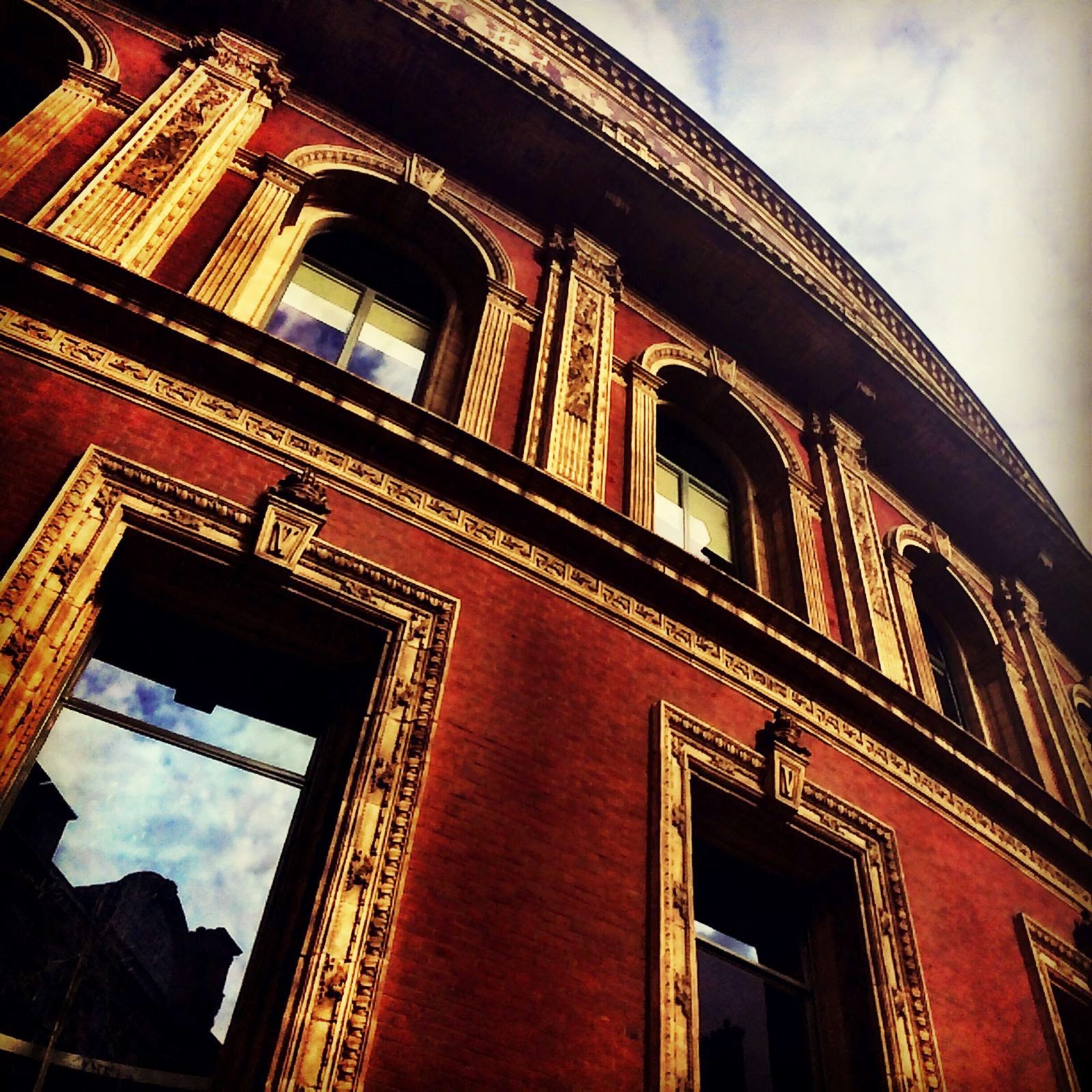
Rehearsing with John Wilson and his incredible orchestra for "Kiss Me, Kate," to be performed at Royal Albert Hall as part of the BBC Proms.
This incredible 1948 Cole Porter classic features one of the greatest scores in music, as well as a fantastic "play-within-a-play" stories based on William Shakespeare's "The Taming of the Shrew." I was honoured to be playing Lilli Vanessi/Katharine (aka "Kate") in such phenomenal company! Plus it was great fun to work my classical acting chops once again-- thank you BA in Acting from RCS!

With 10 days to go, here we are sound-checking in the hall! Casual day at the office.

Casual day at the office.

Back to Royal Albert Hall
"MISSING: ALL OF MISS SILBER'S WARDROBE..."

Fanciest dressing room possibly EVER.
Everything it takes to make a "Shrew..."
with my incredible hair and makeup artist Pippa-- one of the BBC's best and most prolific freelancing talents.


Ladies and gentleman... Miss Vanessi ready for her entrance... it's showtime!

TAME that Shrew!

This particular Prom sold out within minutes, meaning that over 6,000 people were in attendance at the live performance in Royal Albert Hall ©BBC
with the beautiful British star Louise Dearman just before the performance began,
With American baritone Ben Davis (who played "Fred Graham/Petruchio") right after the cameras for BBC 1 rolled, 
and the radio broadcast went live! Nooooo pressure.


A friend captured this lovely shot of our (4th!) curtain call: possibly one of the most thrilling moments of my life. I shall never forget it.
The stars of the show moments after the curtain came down: Ben Davis, Alexandra Silber, John Wilson, Louise Dearman and Tony Yasbeck